
ESP

CASE STUDIES

CASE STUDIES

D01 Software

D01 Software

Configurable Web App

Configurable Web App

CASE STUDIES

The objective of the project was to establish the foundations of a software system that could be rapidly and efficiently adapted to each client’s needs.


El encargo consistió en el desarrollo de un entorno digital que conectara inquilinos, propietarios, presidentes de comunidad, proveedores y la administración (Althena). Dicho entorno permitiría la apertura y seguimiento de nuevas incidencias, gestiones y proyectos.

Client

Driving01, internal project

Team

1 Diseñador Ux/UI - 1 programador frontend 

Applied knowledge

Figma Variables · Design Tokens · Atomic design · Design system · WCAG 2.2 Accessibility · Responsive Design · Low and high-fidelity wireframes

Formats

To maximize product adaptability, the most commonly used screen types were designed in a responsive system (desktop, tablet, and mobile), later serving as reusable design templates.

Customization

To achieve the goal of customisation, a variable system (Figma Variables) was implemented. Variables are reusable tokens that store design values and are applied across components within a design system. They include the following properties:

By applying variables to components, screens can be easily reconfigured in both prototypes and development builds.

How does it work?

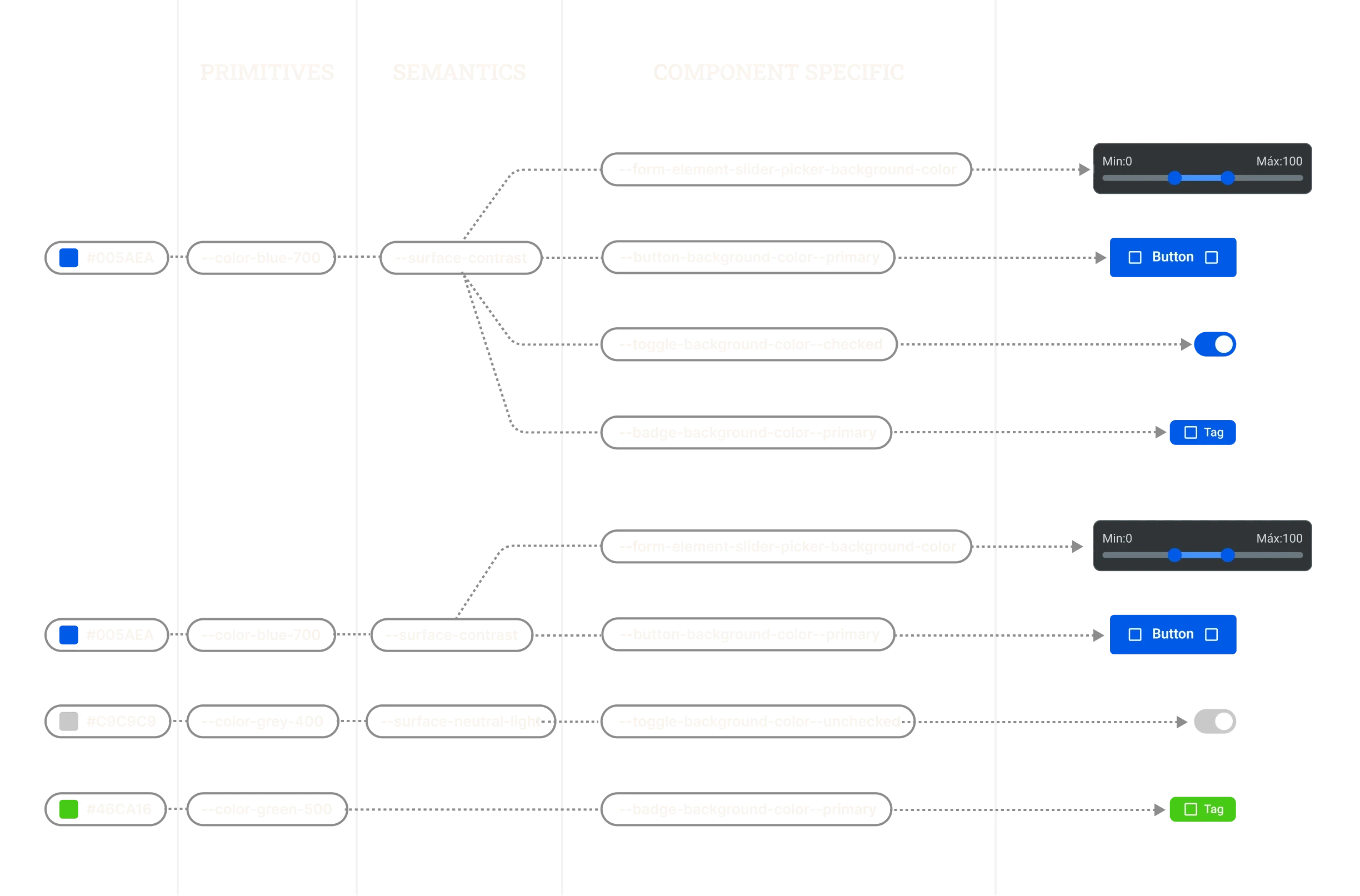
Tokens can reference other tokens, creating a flexible, hierarchical system that adapts efficiently to change. This structure is organised into three layers (collections):

  • Primitives: Core design values defined in their most basic form (e.g. numeric values, raw colour scales, spacing units).

  • Semantic layer: Tokens that define how primitive values are applied in context (e.g. background, text, border).

  • Component-specific layer: Variables that map semantic tokens to specific components, ensuring consistent application across the system.

Al aplicar variables a los componentes, las pantallas pueden reconfigurarse fácilmente tanto en prototipos como en versiones de desarrollo.

¿Cómo funciona?

Los tokens pueden hacer referencia a otros tokens, creando un sistema jerárquico y flexible que se adapta eficientemente a los cambios. Esta estructura se organiza en tres capas (colecciones):

  • Primitivos: Valores de diseño fundamentales definidos en su forma más básica (p. ej., valores numéricos, escalas de color en bruto, unidades de espaciado).

  • Capa semántica: Tokens que definen cómo se aplican los valores primitivos en contexto (p. ej., fondo, texto, borde).

  • Capa específica de componente: Variables que asignan tokens semánticos a componentes concretos, garantizando una aplicación consistente en todo el sistema.

Al aplicar variables a los componentes, las pantallas pueden reconfigurarse fácilmente tanto en prototipos como en versiones de desarrollo.


¿Cómo funciona?

Los tokens pueden hacer referencia a otros tokens, creando un sistema jerárquico y flexible que se adapta eficientemente a los cambios. Esta estructura se organiza en tres capas (colecciones):


  • Primitivos: Valores de diseño fundamentales definidos en su forma más básica (p. ej., valores numéricos, escalas de color en bruto, unidades de espaciado).

  • Capa semántica: Tokens que definen cómo se aplican los valores primitivos en contexto (p. ej., fondo, texto, borde).

  • Capa específica de componente: Variables que asignan tokens semánticos a componentes concretos, garantizando una aplicación consistente en todo el sistema.

Project phases

Design system

A scalable and organic design system relies on a well‑defined atomic token structure, intuitive core components, and a coherent set of patterns that work seamlessly together. These three elements ensure the system behaves like a living product—easy to extend, consistent across experiences, and capable of evolving without losing its internal logic.

Challenge and resolution

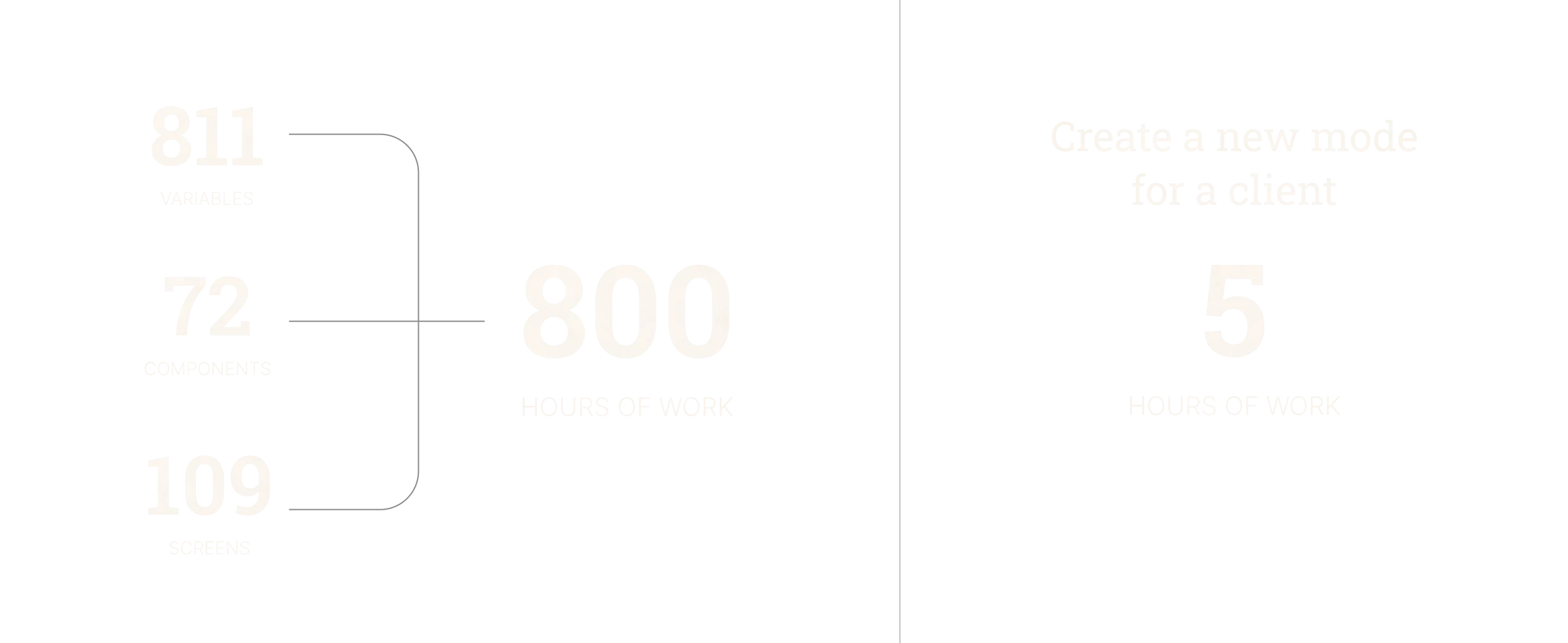
The main challenge of the project lay in its scale. A large number of screens relied on a robust design system composed of a wide range of components. These components needed to be configured with variables, including nested variable dependencies, and so on.

But thanks to this extensive work, D01 was able to significantly reduce the time required to implement design changes across the interface, enabling the product to be tailored to each client’s needs and visual identity.
D01 Software

Configurable Web App

Final outcome

Mode

D01

Screen type

List

Mode

D01

Screen type

List

Mode

D01

Screen type

List

Mode

D01

Screen type

List

Impact

“Thanks to a robust design system and thorough prior analysis, I designed a final product that reduced the time required to launch a new project by 98.44%”

“Thanks to a robust design system and thorough prior analysis, I designed a final product that reduced the time required to launch a new project by 98.44%”

“Thanks to a robust design system and thorough prior analysis, I designed a final product that reduced the time required to launch a new project by 98.44%”

Let's Get in Touch

qverdumoreno@gmail.com

+34 650 923 333

Let's Get in Touch

qverdumoreno@gmail.com

+34 650 923 333

Let's Get in Touch

qverdumoreno@gmail.com

+34 650 923 333